Sanchi Stupa: Timeless Architecture of Peace and Imperial Governance
Perched atop a serene hill in Raisen district, Madhya Pradesh, Sanchi Stupa is one of the oldest stone structures in India. Commissioned by Emperor Ashoka in the 3rd century BCE, it marks the pivotal transformation of the Mauryan Empire following the Kalinga War—from military subjugation to Dhamma Vijaya (conquest by righteousness).
1. The Power of Cultural Symbolism
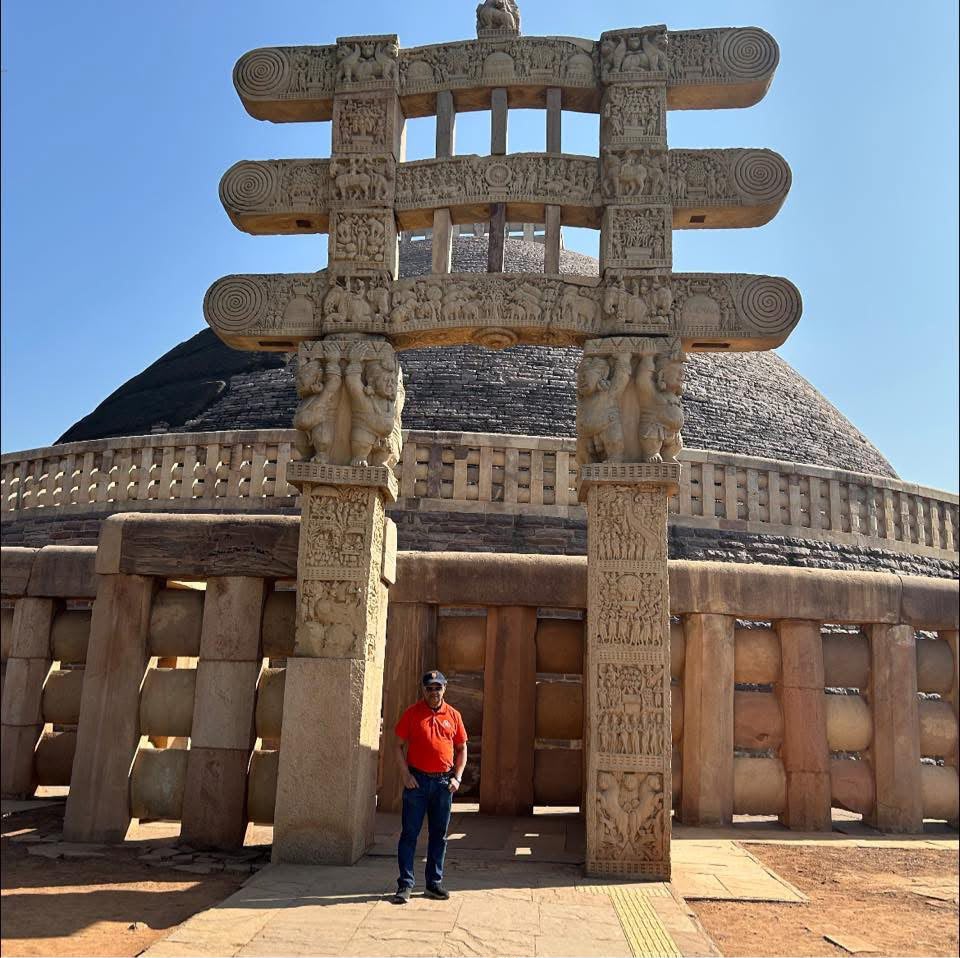
The hemispherical dome of Sanchi is a cosmic diagram representing the enlightened mind and universal equilibrium. Surrounding it are four exquisitely sculpted Toranas (gateways) narrating the Jataka tales. Notice that Ashoka did not erect statues of himself; he chose symbols of liberation, humility, and moral law.
2. Moral Authority Outlasts Coercive Power
Command-and-control hierarchies inevitably generate friction and rebellion. When leadership is anchored in transparent ethics, public service, and deep empathy, organizations develop unshakeable loyalty and multi-generational alignment.